IELTS OVERVIEW

Wishlist Share

About Course

GENERAL OVERVIEW OF IELTS

What is IELTS?

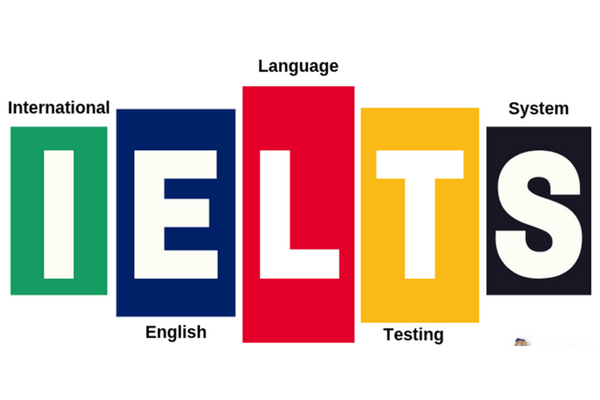
IELTS = International English Language Testing System. It’s the world’s most recognized English test for study, work, and migration. Over 12,000 organizations in 140+ countries accept it, including universities, employers, and immigration offices like Canada, UK, Australia, and USA. The entire test lasts for 2hours 45 minutes.

There are two test types, testing the same skills using different texts. They are:

1) IELTS Academic: Commonly used for University studies. For studies in the United Kingdom, the specification is IELTS UKVI Academic and else where it is Standard IELTS Academic.

2) IELTS General: Used for work migration. The UK specifies that potential immigrants take the IELTS UKVI General Training. In other parts of the world it is Standard IELTS General training .

NB: The above specifications indicate that the IELTS you choose depends on the purpose (study or work), and in what country you intend using it.

COMPONENTS

IELTS has four (4) different parts: Listening (30 minutes), reading (60 minutes), writing (60 minutes) and speaking (11-14 minutes).

1. Listening: 4 recordings, 40 questions. Conversations and monologues. You hear it once. 

   Example: A phone call to book a hotel, a university lecture.

2. Reading: 3 sections, 40 questions. Academic = long articles from books/journals. General = ads, notices, short articles. 

   Skills: skimming, scanning, understanding detail and main idea.

3. Writing: 2 tasks. 

   Task 1: Academic = describe a chart/graph/map. General = write a letter. 150 words, 20 min. 

   Task 2: Both = essay giving opinion/discussion/problem-solution. 250 words, 40 min.

4. Speaking: Face to face with examiner. Recorded. 3 parts: 

   Part 1: Questions about you, home, work, interests. 4 to 5 min 

   Part 2: Speak 2 min on a topic card.

   Part 3: Discussion linked to Part 2 topic. 4 to 5 min.


SCORING

Band 0 to 9

You get a band score from 0 to 9 for each skill, plus an overall band. No pass or fail. 

Band 6: Competent user — can use English in familiar situations 

Band 7:Good user — handles complex language well 

Band 8: Very good user — only occasional errors 

Band 9: Expert user — full fluency

Most universities require Band 6.5 to 7.5 overall. Canada Express Entry often needs Band 6 in each skill. UKVI for visas has specific scores.


Key Facts for Candidates in Cameroon.

1. Where: British Council approved centres in Yaoundé Douala and recently, Bamenda.

2. Format: Paper-based or Computer-based. Whichever you choose, speaking is always face to face.

3. Results: 3 to 5 days for computer, 13 days for paper.

4. Validity: Results are valid for 2 years.

5. Cost: Varies by country. In Cameroon, check British Council Cameroon for current fee.

6. Retake: You can retake anytime. Now there’s also IELTS One Skill Retake in some centres ; you redo just one part.


How IELTS Is Marked — What You need to know

a) Skill: Examiners look for in

Listening & Reading; Right answers only. Spelling must also be correct.

Writing: Task response, coherence, vocabulary, grammar.

Speaking: Fluency, vocabulary, grammar, pronunciation.

Common Myths to Kill on Day 1

1. “British accent only”→ False. You hear many accents: British, American, Australian, Canadian.

2. “I must use big words”→ False. Clear, natural vocabulary scores higher than forced “complex” words.

3. “Speaking Part 2 must be 2 minutes exactly”→ False. Aim for 1:45 to 2:00. Quality beats time.

NB: As an invigilator, here’s what students miss most

-They don’t follow instructions. If it says “NO MORE THAN TWO WORDS”, writing three words = wrong. And in Writing Task 1, describing every single number loses marks. You need overview + key features.

Show More

Earn a certificate

Add this certificate to your resume to demonstrate your skills & increase your chances of getting noticed.

selected template

Student Ratings & Reviews

No Review Yet
No Review Yet